Friday, June 3, 2016

WHEN BERNIE WINS WE ALL WIN

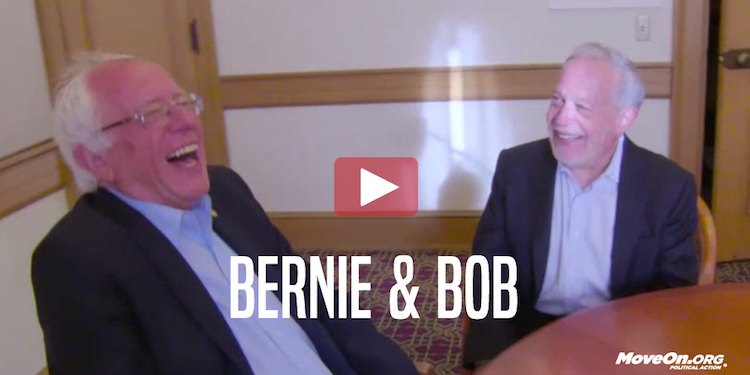
BernieandBob
Bernie's campaign has given voice to countless Americans who are hell-bent to take back our country. 
It has changed our nation and our politics—hopefully forever. Now it's up to all of us. To you and me and the courage and grit it's going to take to fulfill the promise of this historic moment.


Monday, May 9, 2016

THE REVOLUTIONS VOICE GROWS LOUDER

The Young Turks network is one of the largest online video news channels, with a liberal and progressive bent and more than 200 million views a month on YouTube, often beating traditional cable news outlets on the platform.


Wednesday, March 23, 2016

WHY REPUBLICANS WANT TO RUN AGAINST HILLARY

Why do Republicans (and the media)  frequently mention Hillary and say little or nothing about Bernie when reporting on General Election match-ups?


Republicans believe that Hillary will lose the election regardless who she runs against in November. Her loss is almost guaranteed because she will lose the Independents and Crossovers who will cast their votes for "anyone but Hillary."


They see Hillary as the gift that keeps on giving when the GOP attack dogs begin to feast on her. The baggage she carries is "huuuge" (as Bernie would say) and her opponents will have a field day tearing down her (and her husbands) reputation(s). The theme is obvious; can she be trusted? Is she honest? And, there's plenty of evidence to support that she loses on both counts.


There's her secret email accounts that she shared classified information. There's the secret speeches she made to Wall Street bankers who make up the bulk of her donor base. There's the hundred of millions of dollars her and Bill have pulled in for doing nothing more than peddling their influence and connecting power brokers.


Bernie Sanders, on the other hand, scares Republicans because he comes to the race with almost no baggage and is unshakable when it comes to his position on the issues Americans care about; the economy, healthcare, education, the infrastructure, income inequality, immigration, and political corruption.  These are issues Republicans would rather not talk about because they; as well as Establishment Democrats, are a part of the problem and have no solutions.


In a General Election Bernie not only wins the votes of the majority of Millennials who are coming out in droves to vote for him, but also Independents and Crossovers that his message rings true with.


High turnout was reported among Democrats in all three states, with voters waiting hours in line in a few locations and some complaining that officials had not opened enough caucus sites or polling places.

Even after Arizona was called for Clinton, Sanders urged voters to stay in line, hoping to narrow the delegate gap in a state in which Democrats award them proportionally. In fact, Clinton’s Arizona margin narrowed as the night wore on—and Sanders’s dominating performances in Utah and Idaho allowed him to claim the majority of delegates who were up for grabs on Tuesday.


With Donald Trump on track to become the Republican nominee, Sanders has highlighted polls that show him beating the New York businessman in a general election by a wider margin than Clinton.


“There is no question that you are looking at the strongest Democratic candidate,” he said Monday.


His campaign team has repeatedly described the primary calendar as skewed in Clinton’s favor for the first half of the nominating contests and expect Sanders to pick up steam in western states, such as Washington, which holds its Democratic caucuses Saturday.


“We’re at halftime here, and we agree we’re behind, but we think we’re going to win this game,” said Sanders strategist Tad Devine last week.


Jeff Weaver, Sanders’ campaign manager, expressed frustration with the sentiment that Clinton was already locking down the nomination, calling it a “media drumbeat to essentially disenfranchise half of the Democratic voters.”

Wednesday, March 16, 2016

AMERICA'S "DOCTOR DRIVEN" DRUG CARTEL; BIG PHARMA

The media makes banner headlines about notorious Mexican Drug lords who invade the US peddling their nasty drugs with little or no mention that there is an enormous "demand" from Americans for these drugs. Why such a big demand you might ask?


It turns out that the  reason(s) for the drug epidemic can be laid at the door of  our  very own "home grown" medical doctors who, are defacto drug dealers for  none other than Big Pharma.

How did doctors, who pledge to do no harm, let the use of prescription narcotics get so out of hand?

As it turns out this cozy relationship between doctor(s) and drug manufacturers has existed for decades but the boom came  in the prescribing of narcotics by outpatient doctors, driven partly by the pharmaceutical companies that sold those drugs. Between 1999 and 2010, sales of these “opioid analgesics”—medications like Vicodin, Percocet, and OxyContin—quadrupled.


By 2010, the United States, with about five per cent of the world’s population, was consuming ninety-nine per cent of the world’s hydrocodone (the narcotic in Vicodin), along with eighty per cent of the oxycodone (in Percocet and OxyContin), and sixty-five per cent of the hydromorphone (in Dilaudid).


As narcotics prescriptions surged, so did deaths from opioid-analgesic overdoses—from about four thousand to almost seventeen thousand. 

Studies have shown that patients who receive narcotics for chronic pain are less likely to recover function, and are less likely to go back to work. The potential side effects of prescription narcotics include constipation, sexual dysfunction, cognitive impairment, addiction, and overdosing. 

When patients receive narcotics for long periods, they can even become more sensitive to pain, a condition called hyperalgesia. (J. David Haddox, the vice-president of health policy at Purdue Pharma—the manufacturer of OxyContin—acknowledged “opioid analgesics have sometimes been associated with diminished pain relief in the face of increasing doses.”)


What’s more, no medication reliably eliminates pain in all patients, and narcotics are no exception. And there isn’t good evidence that the prescription of narcotics to treat chronic, non-cancer pain is effective over long periods: most studies of prescription narcotics last only twelve to sixteen weeks.

Monday, March 14, 2016

A REASON TO NOT VOTE FOR HILLARY

Former Secretary of State Hillary Clinton has much of the establishment supporting her in the Democratic primary. It has brought heavy airtime, major political support, and huge corporate donations. Despite these advantages, she has met Sanders’ clean, issues-based campaign with deliberate misrepresentation and dirty tactics. These calculated moves put off general election voters, including people like me. Hillary, you’re losing my vote.
The Clinton campaign is certainly under pressure. Sanders has won 9 of the 22 states that have voted. Additionally Iowa was a virtual dead heat and Massachusetts, where President Bill Clinton may have committed a voter violation felony (which he denies), came in close. Democrats abroad finished voting on March 8 and look to deliver a landslide victory to Sanders. What was a blowout last July increasingly, nationally, is a single-digit race.
Her latest major deception was two days before Michigan’s March 8 primary (where Sanders pulled off a surprisingly win.) At the debate, Clinton said, “He was against the auto bailout … He voted against the money that ended up saving the auto industry.”  This grossly misrepresented Sanders’ record as he voted for the auto bailout but against releasing second half of bailout money, mostly intended for the banks. While Sanders answered, she interrupted him twice in an attempt to weaken his response and leave this misconception with voters. It’s eerily reminiscent of what she did with President Obama in 2008 (see the 4-minute mark, in which Obama similarly calls her out on her and her family’s deceptive behavior as well as her criticism that he can’t pay for his plans).
This was less than a week after President Bill Clinton went to Massachusetts polling places. It prompted a petition to investigate his potential third-degree voter violation felony that has garnered more than 100,000 signatures. Hillary’s win there on Super Tuesday prevented a fifth victory for Sanders, which would have undoubtedly brought significant positive press coverage.
Is Hillary alienating voters more quickly than they can be registered?
Before we continue the review, let’s focus on all the unfair advantages her money and neoliberal record have brought her in terms of institutional support.
The media establishment has been strongly biased towards Clinton. The Washington Post, now owned by Amazon founder Jeff Bezos who is worth $55 billion, ran 16 negative stories on Sanders in 16 hours starting during the March 6 debate (the Post investigated itself and found no bias?!)  Sanders’ wins are downplayed or ignored in the mainstream media. Delegate counts routinely and deceptively include unpledged super delegates. The New York Times has run a series of op-eds that would be expected to praise Sanders given the title,writer’s past or text. Instead, they promote Clinton. (The New York Times, which endorsed Clinton, has done better recently after extensive criticism.) The bias goes way back. From January through November of 2015, Clinton received about 23 percent of evening network airtime devoted to presidential candidates, similar to Trump. Sanders received 1 percent. Clinton and her supporters (sometimes with undisclosed financial ties) continue to get more coverage by the mainstream media.
The Democratic National Committee has also tilted the playing field. It scheduled six debates at inconvenient times before the first primaries – versus 26 in 2008 — using an undemocratic process under Chair (and former National Co-Chair for Hillary Clinton’s 2008 presidential run) Debbie Wasserman Schultz. The debates have placed a relatively weak emphasis on wealth inequality, climate change, American militarism, and the poor – crucial areas where Clinton, despite a past of global leadership positions, does not shine.
Despite this rigged system, Clinton has employed dishonesty and deception throughout her entire campaign.
  • During the first debate, she put in a surprisingly strong performance that allowed the media to describe it as a “win.” Only later did we find that Clinton misled the American public on her climate accomplishments, whistleblower Edward Snowden’s options, her support for the TPP, and her banking plan (a scale of deception similar to Romney’s.) For each, the wording appears to be carefully and deceptively crafted.
  • Daughter Chelsea Clinton suggested Sanders’ plan for single payer, universal health care would leave poor and middle-class Americans without health insurance, a claim ranked “Mostly False” by Politifact and described as “a mischaracterization at best.”
  • Hillary Clinton and her supporters have recently characterized Sanders as a single-issue candidate focusing on banking. If anything, his major focus is inequality, which is currently the worse in the developed world, and in the US since the Great Depression. Her characterization is especially ironic as she has adapted his positions on the Keystone XL Pipeline, TPP, college affordability, and fracking. (For the record, Sanders does also have a strong plan for banks, who have paid $200 billion in fines.)
  • A series of patronizing articles and statements from high profile Clinton supporters imply female Sanders supporters don’t understand loyalty and institutionalized sexism. This often comes from women who have little to say about devastating America’s militarism, wealth inequality, environment, and climate change policies. Feminists, perhaps; humanists, likely not.
  • Hillary continues to misrepresent Sanders’ votes that supported certain policies within a bill, even while he called out others. For example, before the 1994 Crime Bill vote, Sanders delivered a powerful critique which included, “Mr. Chairman, how do we talk about the very serious crime problem in America without mentioning … that we have the highest rate of childhood poverty in the industrialized world by far, with 22 percent of our children in poverty and 5 million kids hungry today?”
Right now, I feel like I’m one big or four small whoppers from switching allegiance from her, should she win the primary, even as a swing state voter – I’d feel far better supporting Green Party candidate Dr. Jill Stein.
Both candidates are certainly better than the Republicans, whose politics and conduct are generally disgraceful and heartless.  So it’s possible I’ll change my mind. But I do expect far greater personal integrity in my president.
Clinton’s campaign, which exploits institutional bias and deception, is a diversion from our national challenges. Many of us expect more. She should honestly focus on the issues at hand. Win or lose, that’s what one would do who prioritized her country over her career.
Dear Hillary, You’re Losing My Vote - NationofChange | Progressive Change Through Positive Action

Sunday, March 13, 2016

HILLARY; A "NATURAL" BS ARTIST!

Will the real Hillary please stand up.


One Hillary wants us to believe that she is just an average American struggling to the top with the best of intentions; helping fellow Americans with their struggles.


The image she conveys is a warm fuzzy.


Clinton acknowledged during Wednesday’s Democratic debate that she was “not a natural politician” and expanded on the theme in an interview with the SiriusXM radio show “The Mayor” the following day.

“This is harder for me,” she said. “I admire the skills my husband and President Obama have. They’re charismatic and they’re compelling and they’re great orators. I do get up every day and say, ‘What can I do to try make someone’s life better?’”


Now, let's compare that with the other Hillary. The one who when asked about the millions of dollars she is pulling in for making speeches to the rich and powerful;


Anderson Cooper: "But did you have to be paid $675,000 [for three speeches to Goldman Sachs]?"

Hillary Clinton: "Well, I don't know. That's what they offered."


Even the most ardent Clinton supporter should be asking; Is Hillary being "truthful" with us?

Hillary Clinton is taking a new tack to boost her image in the Democratic presidential campaign.

Clinton acknowledged during Wednesday’s Democratic debate that she was “not a natural politician” and expanded on the theme in an interview with the SiriusXM radio show “The Mayor” the following day.

“This is harder for me,” she said. “I admire the skills my husband and President Obama have. They’re charismatic and they’re compelling and they’re great orators. I do get up every day and say, ‘What can I do to try make someone’s life better?’”

Few objective observers view such comments as spontaneous moments of candor. Rather, they see them as part of a strategy to warm up perceptions of the Democratic front-runner, who is seen suffering an enthusiasm deficit by comparison with her rival Bernie Sanders.

“It’s an attempt — maybe successful — to get people to see her less as a politician and as more of a personality,” said Hank Sheinkopf, a New York-based Democratic strategist who has worked for Clinton in the past but has no involvement in the current campaign. “She is attempting to remove herself from an elite class of people who tend to be disliked right now — professional politicians.”

Clinton has an uphill climb ahead if she is to freshen up her public image, however.

Polling shows that while voters respect her experience and toughness, many find her untrustworthy.

Given Hillary's track record it's understandable why voters are suspicious;


Hillary is veering from the truth when she suggests her $225,000 per speech fee, paid three times by Goldman Sachs, was "what they offered."

It was not what they offered -- it was what Team Hillary demanded.

A review of her 2014 tax return posted on her website shows that $225,000 was her minimum fee.

She received $225,000 for 34 of the 41 speeches listed on her tax return. Of the remaining 7 speeches, two were for 250,000 and the others for $265,000, $275,000, $285,000, $305,000 and $400,000. In total she received $9,680,000 for these speaking engagements in 2013.

Wall Street firms funded 14 of her 41 talks. In addition to Goldman Sachs, the list includes Morgan Stanley, Deutsche Bank, Fidelity Investments UBS and Bank of America. Her benefactors also include hedge funds and private equity firms like Apollo Management and Kohlberg, Kravis, Roberts.

Why did Hillary Take the Money?

Carl Bernstein, of Watergate fame and Hillary biographer, commented on CNN that the White House is "horrified that Clinton is blowing up her own campaign." He said they can't believe she took the money and didn't see the ethical problems that would dog her.

It is not credible for her to argue that she took the money because she wasn't sure she was going to run for president or that she was "dead broke." She and Bill hauled in $139 million from 2007 to 2014.

It seems enormously difficult for Hillary to explain, even to herself, why she took the money. One possibility is that she wanted to send a message that she would not use populist rage against Wall Street during her campaign. That instead she would work with Wall Street to solve financial problems for the good of the country. We will find out more when (if) her transcripts are ever found and released.

But the boarder reason may lie in the fundamental relationship between the Clintons and their wealthy friends and benefactors. Hillary, Bill and Chelsea (whose husband is a hedge fund partner) believe that Wall Street is a vital part of economy, composed mostly of very bright, honorable and talented people, like their classmates at Yale and Stanford. Sure, every now and again there are a few bad apples, but the barrel is fundamentally sound.

How could she be so politically tone deaf on this issue?

It's because she still lives in world surrounded by so many of the best and brightest in and around Wall Street. Attacking them would be like attacking her community of friends and financial supporters. How could taking money from such decent, talented and productive people be wrong? Isn't it fair to earn a $225,000 speaking fee, given that's what Wall Street elites earn per hour?

So What's Wrong with Taking Money from Wall Street?

The pundits point out that she has created a "perceived" conflict of interest, whether real or imagined. In essence they are saying that there's nothing inherently wrong with taking the money. It's not really tainted.

Hillary states that she never changed her vote due to campaign contributions. But evidence is mounting via previous accounts by Elizabeth Warren, that Hillary may have switched her position on bankruptcy laws to please her Wall Street contributors after becoming the Senator New York.

But these attacks miss the most basic question: Is money tainted? Is it blood-money?

Sanders believes it is by arguing that "the business model of Wall Street is fraud."

There is considerable data to support him.


Monday, February 29, 2016

FEELING THE BERN? VOTE!

On March 1, presidential candidates will be evaluated by voters in 12 states and one territory – that’s the largest number of primary elections to be held on any given day and also the day when the largest number of delegates are chosen. And because those states and territories are so different from one another, it’s also the first time in the electoral calendar that the presidential hopefuls will really have their national electability put to the test. No wonder it’s known as Super Tuesday.
Here, we give you a primer on all 13 locations that will, together, shape the rest of the race.

Alabama

Primaries held: Republican and Democratic presidential primaries
Delegates: 50 Republican delegates, 60 Democratic delegates
Things to watch out for: There is very little polling of Democrats in Alabama – just one poll so far in fact. Between February 14 and 16, Public Policy Polling (PPP) included Alabama in 12 states it looked at to see how the Democratic candidates were faring. PPP found that of the 500 primary-goers spoken to in Alabama, Hillary Clinton was leading Bernie Sanders 59% to 31%, and 74% of those polled said they were firmly committed to their choice. There is more polling data on the Republican side, the average of which points to a steady double-digit lead for Donald Trump, according toReal Clear Politics .
Demographics: The percentage of Alabama’s population that is black is twice as high as it is nationally. The PPP poll found that black Alabamians are much more likely to vote for Clinton than Sanders (67-22). However, economic concerns in the state may weaken Clinton’s advantage: the median household income in Alabama is almost $10kbelow the national median and 18.6% of Alabamians live below the poverty level (compared to 15.4% nationally). When PPP asked respondents which candidate they trusted to crack down on Wall Street, Clinton’s lead fell to 48-35 although Sanders was not necessarily trusted on broader economic competence. When asked which candidate they trusted for “raising incomes of average Americans” Clinton was ahead of Sanders 56-32.

Alaska

Primaries held: Republican presidential caucuses
Delegates: 28 Republican delegates
Thing to watch out for: Alaska has also been overlooked by the pollsters. Just one pollhas checked the temperament of Republican caucus-goers here and that was back in January so there is a lot of uncertainty about what will happen here on March 1. (The Democratic caucuses will be held later in the month, on March 26.)
Demographics: The smallest eligible voter population after Wyoming and Vermont, Alaska doesn’t have many delegates to play with. With a median household income of $70,760 (the national figure is$53,046 ), Alaska is one of the wealthiest states in the country.

American Samoa

Primaries held: Democratic presidential caucuses
Delegates: 10 Democratic delegates
Thing to watch out for: Well, just watching it would be a start. US territories often get forgotten during the electoral process, not least by the media.
Demographics: The 55,000 residents of this tiny group of islands near Australia are considered US nationals but not US citizens – as such, they can send delegates to nominating conventions but they are unable to vote in the national election itself.

Arkansas

Primaries held: Democratic and Republican presidential primaries
Delegates: 40 Republican delegates, 37 Democratic delegates
Thing to watch out for: Clinton won in 2008 in the state where her husband was governor and she looks set to do so again. Republican polling here is scarce though so any numbers should be treated with caution – just one poll has been conducted so far this year, which found Trump was four points behind Ted Cruz. In 2012, Mitt Romney won here (and went on to be the Republican Presidential nominee) but in 2008, Mick Huckabee won Arkansas but did not win the national vote.
Demographics: Compared to the rest of the country, voters in Arkansas are more likely to be white and less likely to have completed a bachelor’s degree.

Colorado

Primaries held: Democratic and Republican presidential caucuses
Delegates: 37 Republican delegates, 78 Democratic delegates
Things to watch out for: These caucuses are a little unusual since the Republican party will not vote here but will instead allow its 37 delegates to remain unpledged to a specific candidate. Last summer, it was decided that the state would forfeit its role in the early nomination process. Republican party officials in Colorado decided that theywanted delegates to be free agents rather than having their hands tied at the national convention in Cleveland in July. Votes will still take place just like at normal caucuses but they won’t be official and delegates won’t necessarily be bound by the results. It’s not yet clear whether that will work for or against Republican candidates that are doing well in Colorado right now. In fact, it’s not even very clear who is doing well in Colorado right now. There’s very little Republican polling here – just one survey conducted by Quinnipiac University in November which found that Ben Carson was leading by 6 percentage points over of Rubio.
Demographics: Voters here are more likely to have completed undergraduate studies than average American voters – they are also slightly wealthier and younger than the rest of the electorate. Many of those young voters are undecided – a fact which could prove important even once the primary process is over and done with.

Georgia

Primaries held: Democratic and Republican presidential primaries
Delegates: 76 Republican delegates, 117 Democratic delegates
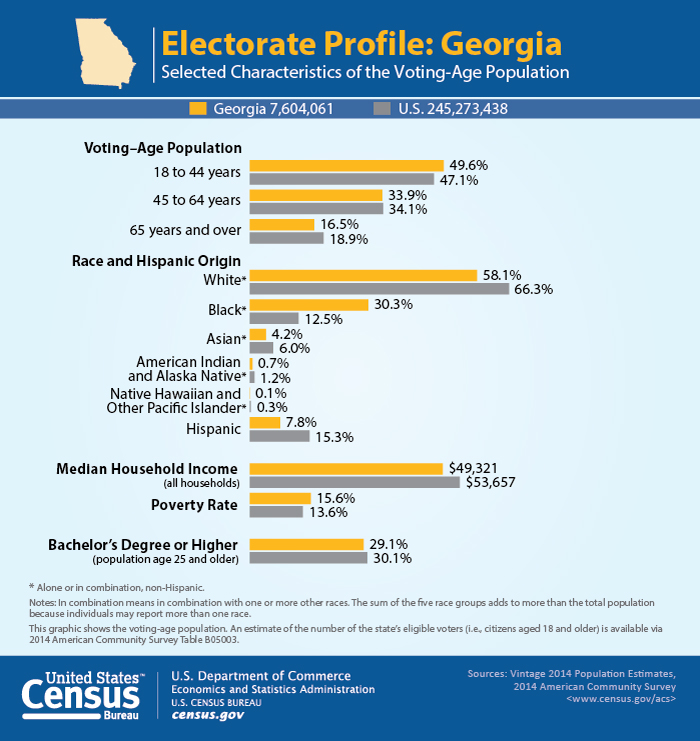
Thing to watch out for: This was one of the only states that Newt Gingrich won in 2012. This time around, Trump is comfortably leading and Clinton looks almost certain to win, despite the fact that Obama beat her here in 2008.
Demographics: Almost one in three voters here are black. According to PPP, 70% of Democratic black voters here support Clinton over Sanders.

Massachusetts

Primaries held: Democratic and Republican presidential primaries
Delegates: 42 Republican delegates, 116 Democratic delegates
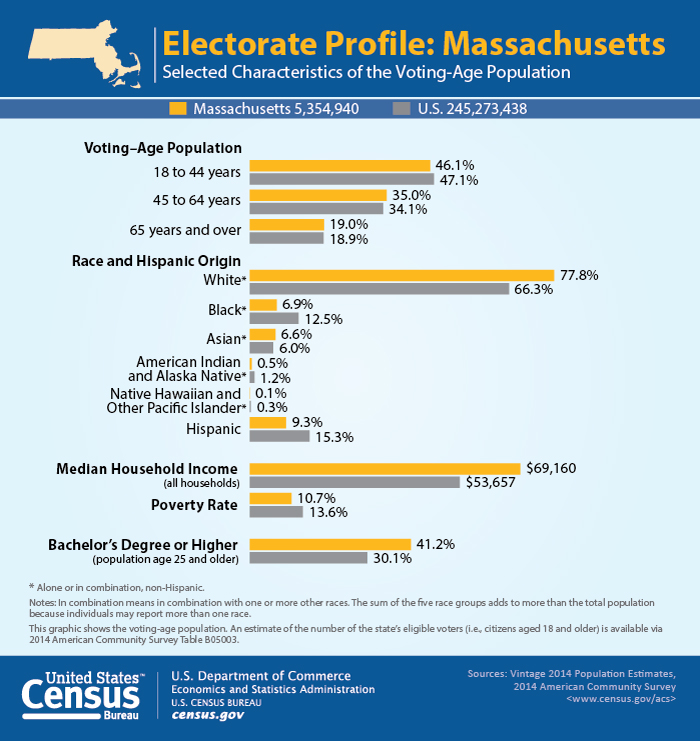
Thing to watch out for: This is one of the closest Democratic races to be held on Super Tuesday – Clinton and Sanders are just a few percentage points apart (although Clinton won here in 2008). Meanwhile, Trump is leading comfortably in Massachusetts.
Demographics: Voters in the state are whiter and wealthier than the national average. In the 2012 national election , the state leaned more toward Democrats by one of the widest margins in the country and had the 9th highest turnout of any state.

Minnesota

Primaries held: Democratic and Republican presidential caucuses
Delegates: 38 Republican delegates, 93 Democratic delegates
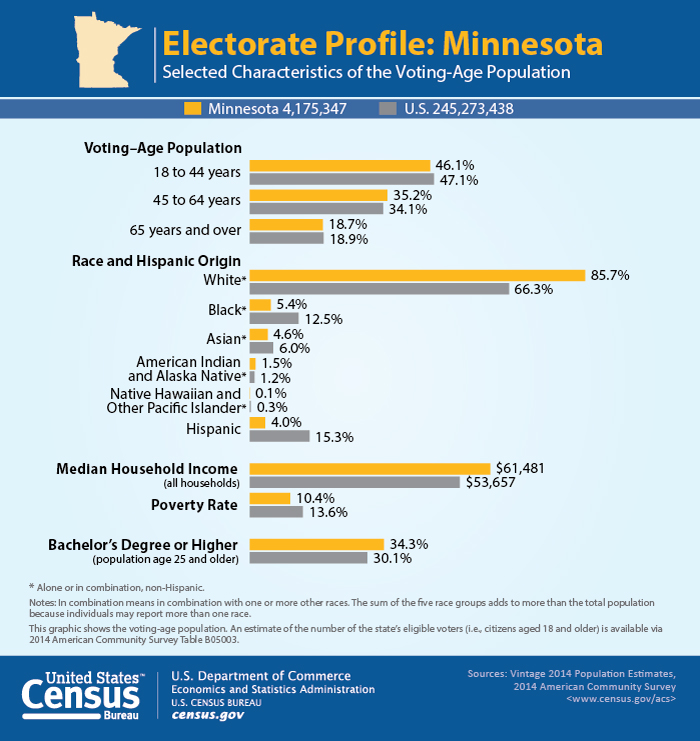
Thing to watch out for: In previous years, Minnesota has held its elections earlier.According toMinnesota Republican party chairman Keith Downey, holding their caucuses on March 1 “will make Minnesota more relevant in the process”.
Demographics: 86% of voters in Minnesota are white – although the age breakdown of voters here is broadly similar to the national picture.

Oklahoma

Primaries held: Democratic and Republican presidential primaries
Delegates: 43 Republican delegates, 42 Democratic delegates
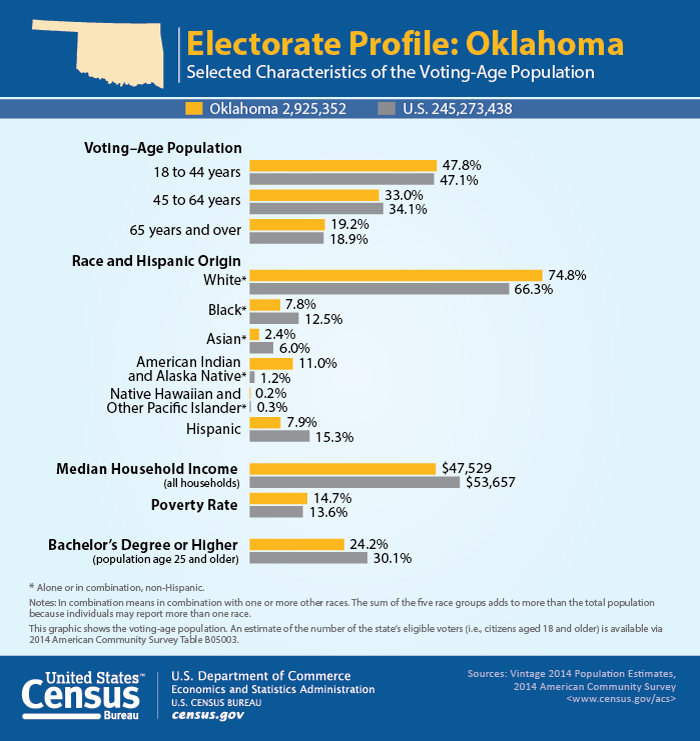
Thing to watch out for: Both Clinton and Trump have a smaller lead here than they do nationally so this will be an interesting test ground for both candidates. According toReal Clear Politics ’ polling averages, for Republicans this could also be a close fight for second place since Ted Cruz and Marco Rubio are less than two percentage points apart.
Demographics: In the last national election, Oklahoma had the 49th lowest turnout of any US state.Voters there are poorer and more likely to be white than the US electorate as a whole.

Tennessee

Primaries held: Democratic and Republican presidential primaries
Delegates: 58 Republican delegates, 75 Democratic delegates
Thing to watch out for: Be cautious of polling on this state because there’s little of it, which means a much bigger margin of error. However Clinton has been the clear winner of the two polls that have been conducted since November – she also won here in 2008.
Demographics: Voters here are more likely to be white and have a lower household income than the national average. Tennessee is the most religious of the Super Tuesday states. As the graphic below from Pew Research Center shows, 80% of adults here say religion is very important and Evangelical Protestants (a group which has been favorable to Ted Cruz in the past) make up 67% of Tennesseans.

Texas

Primaries held: Democratic and Republican presidential primaries
Delegates: 155 Republican delegates, 251 Democratic delegates
Things to watch out for: Just watch everything. With so many delegates, Texas will be an incredibly important state in determining the presidential candidates in this election. Cruz is leading in the polls in Texas; a win could help turn the candidate’s fortunes around at the national level. In 2008, Texans voted for Clinton, a fact which might still work in her favour eight years later.
Demographics: In the last national election, Texas had one of the lowest turnout rates in the country.After New Mexico , this is the most important Latino voting state in the country – 35% of voters here are Hispanic.

Vermont

Primaries held: Democratic and Republican presidential primaries
Delegates: 16 Republican delegates, 26 Democratic delegates
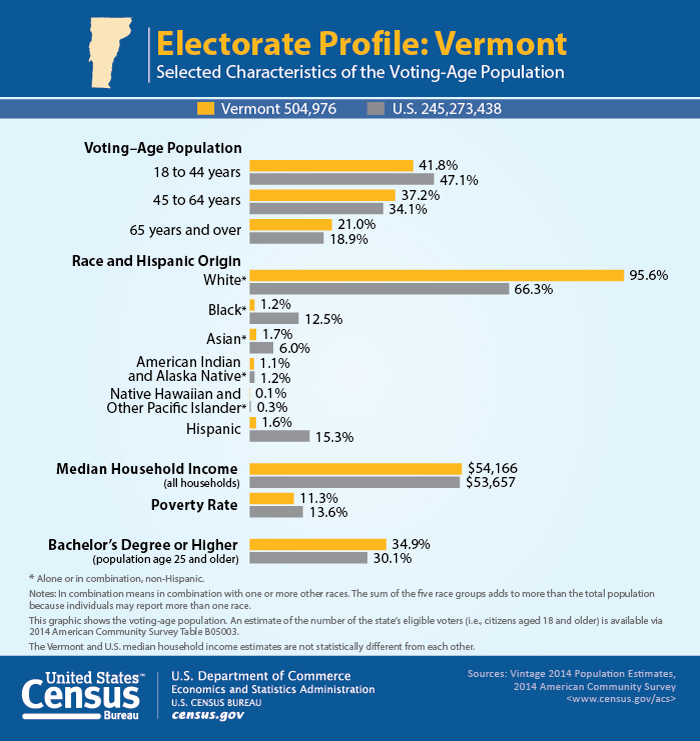
Thing to watch out for: Bernie Sanders is likely to clean up in this, his home state. But that’s unlikely to be a big help to him overall. Since Vermont is one of the least populated states in the country, only 26 Democratic delegates will have a say here.
Demographics: 96% of voters here are white and one in five are over the age of 65.

Virginia

Primaries held: Democratic and Republican presidential primaries
Delegates: 49 Republican delegates, 109 Democratic delegates
Thing to watch out for: This might not be the most exciting of the Super Tuesday races – Clinton looks like a sure thing and Trump’s got a pretty solid chance too according to the polls that have come out so far this year.
Demographics: Voters in Virginia are slightly wealthier and more likely to have completed a bachelor’s degree than the national average.